



When those in power bend the machinery of justice to their will, they rarely stop with their personal enemies. In 2025, Donald Trump began repurposing the powers of the federal government to hobble the infrastructure that enables Americans to vote—and especially to vote for Democrats.
Dictating Prosecutions
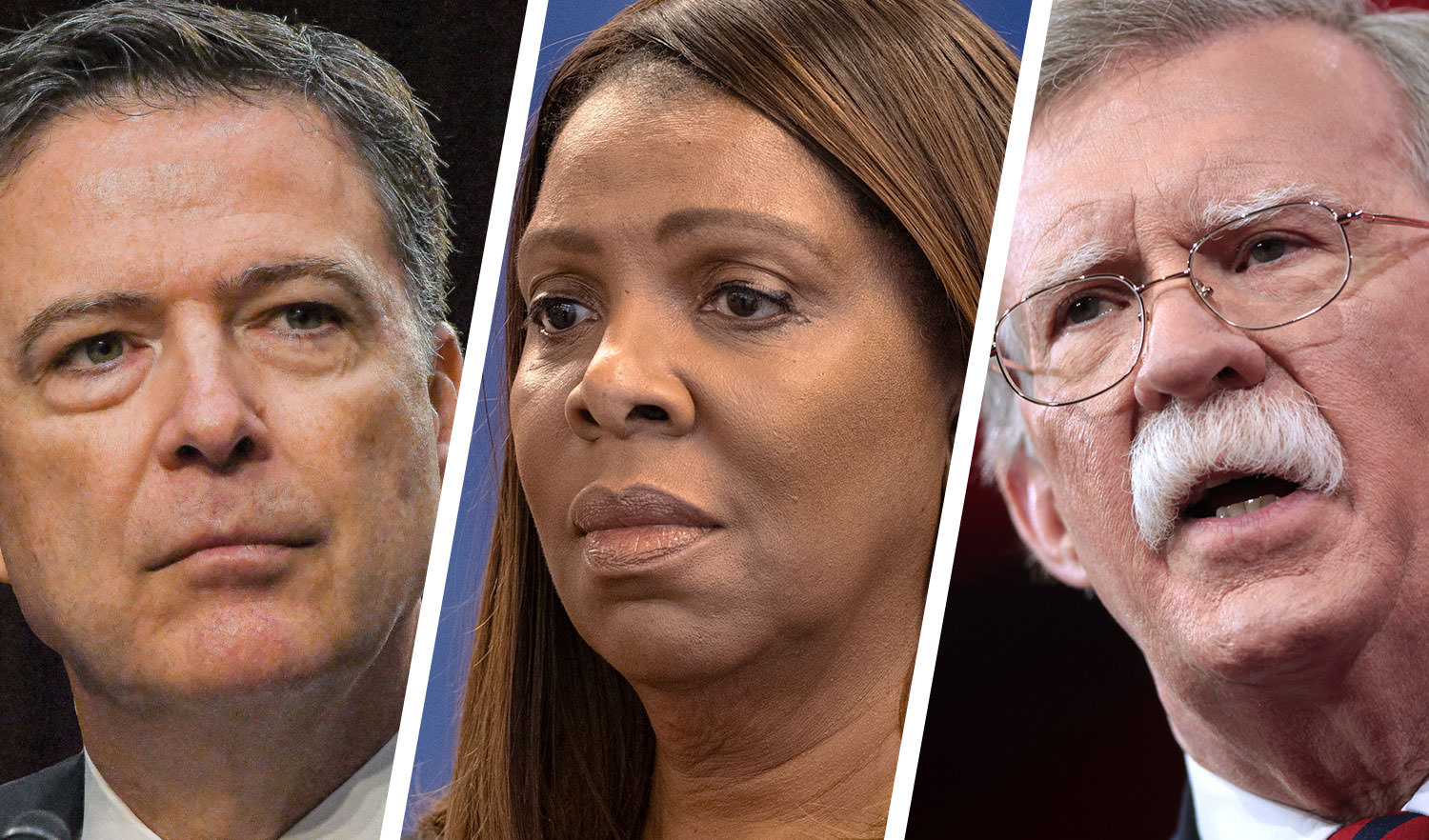
Within months of taking office, Trump demanded that former FBI Director James Comey and New York Attorney General Letitia James be indicted. Two U.S. Attorneys, both career prosecutors, refused on the grounds of insufficient evidence—so Trump forced them out, replaced them with a loyalist from his White House staff with no prosecutorial experience, and within days she produced the desired indictments.
Trump continues to name people he wants to be indicted, such as California Senator Adam Schiff and his former national security advisor, John Bolton. And in response, federal prosecutors are reportedly pursuing criminal charges—as reflected in Bolton’s October 16th indictment on offenses that bear a strong resemblance to those Trump was charged with by then Department of Justice Special Counsel Jack Smith.
Prosecutorial independence has now ended, replaced by presidential dictate. That pattern of rule-by-decree instead of rule of law is now being extended to the electoral system itself. Trump and his advisers are deploying executive orders, presidential memoranda, and agency directives to constrain voter registration, intimidate donors, and criminalize civic participation under the banners of “election integrity” and “domestic terrorism.” The result is an emerging architecture of suppression designed to ensure that the 2026 elections sustain Trump’s hold on power.
Weaponizing Election Machinery
In March 2025 the White House released its Executive Order Preserving and Protecting the Integrity of American Elections. It directs the Election Assistance Commission (EAC), created by the Help America Vote Act of 2002 (HAVA), to rewrite the National Mail Voter Registration Form to require anyone using it to supply documentary proof of U.S. citizenship. It further instructs federal agencies to “undo” President Biden’s earlier order expanding voter access. A companion section orders the Department of Homeland Security (DHS) and the so-called “Department of Government Efficiency” (DOGE) to cross-check state voter rolls against federal immigration databases and tells the Attorney General to prioritize lawsuits against states that count ballots received after Election Day.
DOGE, established by executive order and embedded across federal agencies, was granted “full and prompt access to all unclassified agency records, software systems and IT systems” (to the maximum extent consistent with law) under the guise of efficiency modernization. DOGE, positioned as conduit for “non-citizen” lists that DHS transmits to states, turns bureaucratic data-mining into a suppression pipeline. The algorithms flag the voter as “illegal,” DOJ pressures, and states purge.
Implementing the order collides with the National Voter Registration Act, which requires states to “accept and use” a single federal form relying on only a sworn attestation of citizenship – not any particular documentary proof, such as a birth certificate. The Supreme Court in Arizona v. Inter Tribal Council ruled that states—and by extension the EAC—cannot lawfully add documentary proof requirements. But with the Executive Order, organizers and their lawyers must decide whether to follow precedent or risk exposure if the Court reverses course.
The DHS–DOGE cross-checks rely on immigration databases riddled with outdated entries and misclassifications—examples include naturalized citizens coded as foreign-born, and expired visa holders still listed as present. The administration can portray these flawed matches as evidence of “illegal voting,” compile “non-citizen” lists, and demand that states “clean” their rolls under federal pressure. DOJ may sue, withhold federal funds from states, or simply slow disbursements—each a lever of coercion. Because EAC grants fund ballot equipment, staffing, and training, even the hint of withheld funds can compel compliance.
Cross-check systems are not new: In 2017, Kris Kobach’s Interstate Crosscheck program flagged hundreds of legitimate voters for every one double vote caught. The program collapsed after legal challenges and security breaches.
Most mail ballots come not from overseas but from ordinary residents—students, caregivers, older voters. By directing DOJ to challenge post-Election-Day receipt rules selectively, and by threatening legal or funding consequences in states that preserve those windows, the administration can constrict mail voting where Democratic turnout is strongest. Officials can also use flawed cross-checks to claim that legitimate voters are “non-citizens” and pursue prosecutions for illegal voting.
Criminalizing Democratic Fundraising
On April 24 Trump signed a memorandum directing DOJ and Treasury to investigate alleged straw donors and foreign funds moving through online platforms, citing GOP committee reports about ActBlue, the Democratic fundraising portal. Though framed as a 180-day review the memo immediately launched a probe. Congressional Republicans reinforced the narrative with subpoenas and hearings; several Republican state attorneys general announced parallel investigations.
No equivalent inquiry has been directed at WinRed, despite reporting of questionable or foreign-linked donations in GOP pipelines. The point is to criminalize Democratic fundraising and frighten donors.
From “Antifa” to “Domestic Terrorism”
The same strategy has been extended from campaign finance to activism itself. Trump’s Executive Order Designating Antifa as a Domestic Terrorist Organization, issued September 22, and his September 25 Presidential Memorandum on Countering Domestic Terrorism and Organized Political Violence extend the attack to grassroots political activities, including organizing. Despite Trump’s effort to brand Antifa a “terrorist organization,” it is not an organization at all but a loose movement opposing fascism and racism, without formal structure. U.S. law provides no mechanism for designating domestic groups—let alone political movements—as terrorist entities. Nevertheless, the memorandum instructs DOJ, DHS, and Treasury to identify organizations “meeting the definition” of domestic terrorism and to coordinate financial-disruption efforts, including IRS scrutiny of tax-exempt financing. On October 16, 2025, the Wall Street Journal reported that the administration is moving to overhaul IRS Criminal Investigation—installing loyalists, curbing IRS counsel’s role, and compiling a target list that includes major Democratic donors such as George Soros—to facilitate criminal inquiries of left-leaning groups. The actions are clearly directed to generate politically motivated investigations to chill lawful political activity and punish Trump’s political opponents.
Targeting Democrats and Political Opponents as Domestic Terrorists
Stephen Miller has called the Democratic Party ‘a domestic extremist organization’ and, in separate remarks, vowed to ‘identify, disrupt, dismantle, and destroy’ what he described as ‘left-wing terrorist networks.’ Attorney General Pam Bondi has echoed him, promising DOJ would “target you, go after you,” and “find out who is paying for it.” These statements dovetail with Trump’s demands that George Soros, his son Alex, and other progressive donors be prosecuted under RICO. In this government, Trump’s social media threats translate into operational orders.
And Trump has not confined his threats to donors or activists. In September 2025 he declared that Illinois Governor J.B. Pritzker and Chicago Mayor Brandon Johnson “should be in jail” for “failing to protect ICE officers” — a warning that even elected executives could be branded as criminals for resisting him.
Under Director Kash Patel, the FBI has shifted priorities. Agents from the Baltimore domestic-terrorism squad have reportedly been reassigned to immigration enforcement. Patel has described the “mainstream media” as “the most powerful enemy the United States has ever seen,” purged career agents who investigated Trump, and diverted resources toward surveillance of journalists, Black Lives Matter activists, and antifascist organizers. Recruiting standards have been loosened and pipelines from ICE and the military have expanded. Combined with new coordination agreements with the Department of Defense, these changes raise the prospect of quasi-military domestic deployments around the 2026 election.
While the Posse Comitatus Act limits federal troops in domestic law enforcement, administration lawyers could lean on National Guard deployments under state Title 32 status, vague “critical infrastructure” support to place uniforms in proximity to civic space, or Trump invoking the Insurrection Act, as he threatened on October 6 and has been considering since at least as early as June. (I discuss Trump’s potential use of the Insurrection Act in my article “Searching for the Trigger,” Washington Spectator, June 23, 2025.)
The RICO Axis: A Blueprint for Integrated Repression
Trump’s repeated invocations of the Racketeer Influenced and Corrupt Organizations Act (RICO) outline a strategy for using the machinery of federal law to intimidate political opponents, disrupt civic participation, and dry up Democratic funding. Within this frame, philanthropy, political fundraising, and activism become components of a criminal enterprise.
RICO’s breadth lets prosecutors allege an “enterprise” and wield grand-jury subpoenas and asset-restraint tools long before any verdict. DOJ might allege that donors, fiscal sponsors, and payment processors are all part of a single “racketeering network.” The FBI would execute subpoenas and publicized raids timed to the campaign season; DHS, through ICE, would question staff and volunteers for supposed foreign ties; and the Department of Defense would contribute intelligence support under the pretext of “protecting election infrastructure.” Each agency acts within its nominal jurisdiction; together they form a vast criminal-security operation targeting ordinary political activity.
RICO supplies the scaffolding as left-leaning organizations are labeled “domestic extremists,” donors accused of “funding insurrection,” and philanthropy cast as foreign interference. Subpoenas and arrests thus fall under the umbrella mandate of “national security.”
Even without indictments, the impact of such investigations is profound. Resources shift from organizing to defense as institutions de-risk. The architecture works as much through fear as command: donors, financial institutions and vendors, anxious to avoid scrutiny, quietly disengage.
Using an “All-of-Government” Model
Taken together, these initiatives form an integrated, all-of-government system designed to constrict participation while maintaining the appearance of legality. The EAC rewrites registration rules; DOJ and Treasury criminalize fundraising; IRS and financial regulators choke money flow; the FBI, ICE, and Defense project visible authority to chill voting at selected democratic-leaning polling sites; and the White House narrative frames Democrats as a foreign-financed terror network. Each element amplifies the next: administrative rule-making justifies investigation; investigation justifies surveillance; surveillance validates the narrative of threat. This is not bureaucratic overreach but a deliberate campaign to prevent free elections—a transformation of executive power into partisan control.
Defending the Elections and the Law
Still, even with this Supreme Court, federal law imposes limits. The Constitution’s Elections Clause reserves control of federal elections to Congress, not the President. The Administrative Procedure Act still requires lawful procedure and reasoned justification for agency rules. Federal appropriations laws forbid diverting funds for unauthorized purposes. Section 11(b) of the Voting Rights Act prohibits intimidation of voters or election workers; federal shows of force near polling sites risk violating it. And its private-suit provisions allow injunctive actions by citizens and groups when states or agencies step out of bounds.
U.S. law contains no provisions to label anyone a domestic “terrorist organization.” The Constitution forbids the government from punishing ideology: Brandenburg v. Ohio continues to bar criminalizing advocacy or association absent incitement to imminent violence. The First Amendment protects political speech, association, and donation.
But for these constraints to matter, they must be enforced in real time. Voting-rights groups and state agencies must be ready to file within hours under the NVRA and the Administrative Procedure Act when federal agencies attempt to implement the “Integrity” order. They will need to seek immediate temporary restraining orders and injunctions to block efforts that unlawfully federalize state election laws. The core principle should be made plain to the public: the Supreme Court has already ruled that requiring documentary proof of citizenship is unlawful.
Similarly, when RICO is used for retaliation, those under investigation must act at the first signs of action. Targets should move for protective orders and a bill of particulars; force prosecutors to define the enterprise and predicate acts, and invoke the First Amendment right of associational privacy established in NAACP v. Alabama and reaffirmed in Americans for Prosperity Foundation v. Bonta. Where officials weaponize process, victims should seek immediate injunctive relief.
States should also investigate federal interference with election administration. If federal agencies pressure officials to purge rolls, disqualify ballots, or surrender voter data, state attorneys general can convene grand juries, subpoena communications, and compel testimony from state employees and contractors. Even if Washington stonewalls, contemporaneous records—emails, subpoenas, testimony—become evidence for later litigation and oversight. Civil-society groups can run parallel suits under state constitutions and civil-rights laws, surfacing contracts and directives that would otherwise remain hidden.
If local officials are indicted, they can file emergency habeas petitions and seek venue transfer from any prejudicial forum. Outside court, legislatures and governors can adopt a strategy of lawful non-cooperation, denying discretionary support for federal task forces or data-sharing implicated in political prosecutions.
States can reinforce the boundary of civic space as well. Most already have buffer zones around polling places, but they can go further by barring law-enforcement or military presence within those zones absent clear, contemporaneous threat assessments recorded on the public record. Such rules combine existing state authority with Section 11(b) of the VRA’s federal protection against intimidation.
Courts and advocates can add pre-emptive tools of their own. Voting-rights groups should file pre-implementation suits the moment any EAC or DHS notice proposes documentary proof or cross-check expansion, seeking temporary restraining orders. States can enact “no-share” statutes forbidding the transfer of statewide voter data to federal programs that fail to meet defined data-quality standards or transparency thresholds—creating state-law hooks for fast injunctions.
Nonprofits and donors can deploy declaratory-judgment actions asserting NAACP/Bonta associational rights the instant RICO or terrorism subpoenas seek donor data, forcing the government to justify disclosure under strict scrutiny. And civic coalitions can form joint-defense agreements to prevent prosecutors from manufacturing “enterprise” theories out of inconsistent responses. Fragmentation creates conspiracy; coordination dissolves it.
From Defense to Prosecution
If democracy is to endure this phase, the fight cannot be framed only as defense. The same officials now invoking RICO against their opponents are themselves engaged in patterns of conduct—conspiracy, intimidation, extortion, fraud—that fit the very elements of racketeering. Federal office does not confer blanket immunity. Executive orders cannot sanitize crimes, nor can subordinates escape state charges when acting beyond authority. The Supremacy Clause was never meant to shield election subversion.
State RICO statutes, like New York’s enterprise-corruption law, were designed to pierce organized schemes of unlawful conduct. Retaliation and obstruction against election officials are predicate crimes. Repeated, they constitute racketeering. In many states, proving just two or three provable acts can suffice. State attorneys general and local prosecutors retain real authority to investigate and indict participants in schemes to coerce universities, punish law firms, or intimidate election officials—even if those participants claim to be acting on presidential instruction. Letitia James demonstrated that power when she not only indicted Trump but secured felony convictions. The retaliation she then faced—her own indictment engineered in response—underscores both the risk and the necessity of state-level action.
Every coerced purge, every fabricated ‘non-citizen’ list, every retaliatory subpoena is both an abuse of power and a racketeering act. Defending democracy means not only slowing suppression, but turning the law back on its abusers. The crimes are not in ballots, political organizers, campaign donors, or voters. They are in the offices of those determined to replace democracy with the rule of one party and one man. Confronting the abusers will be risky, but states determined to uphold the rule of law may prove the last bulwark for those who still believe in a republic founded on the principle of “no kings.”
Jonathan M. Winer, a former senior State Department official, is a member of The Steady State. The Steady State is a nonpartisan organization of more than 280 former senior national security professionals from the CIA, FBI, Department of State, Department of Defense and Department of Homeland Security which advocates for constitutional democracy, the rule of law and the preservation of America’s national security institutions.