




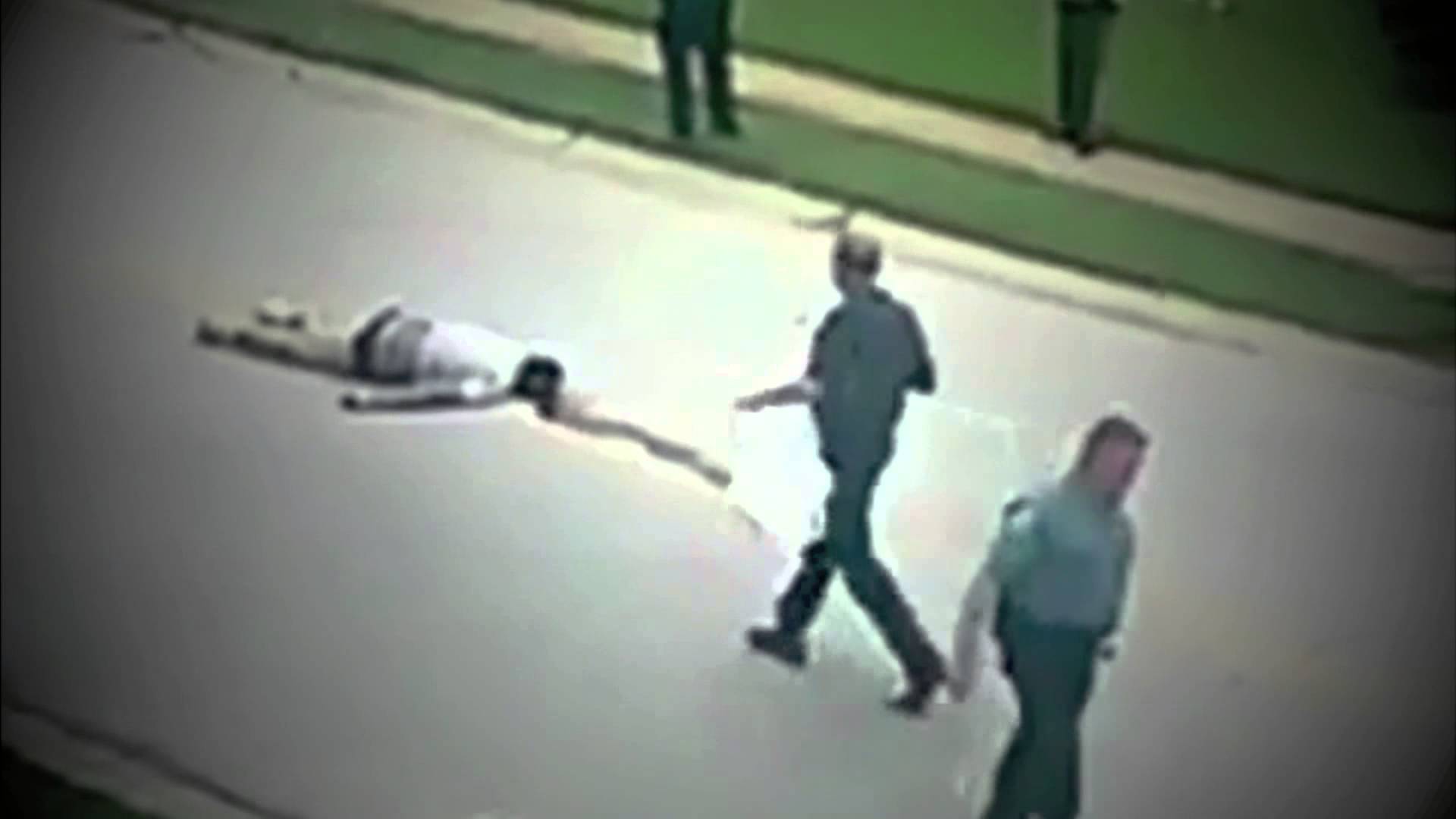
One week before a Ferguson grand jury handed down its decision, Democratic state Senator Maria Chappelle-Nadal told NPR that “in her heart” she believed there would be an indictment. Everything she had read and heard led her to believe otherwise, but she couldn’t accept that a grand jury hearing testimony and looking at evidence since August—including four hours of testimony from Ferguson Police Officer Darren Wilson, who shot Michael Brown—would issue no indictment.
What happened in Ferguson in the wake of the police killing of Michael Brown was the result of thousands of accumulated indignities that occurred over years as the city’s predominantly white police force used threats and muscle to, as the cops saw it, “keep young black men, and kids, in line.”
With the grand jury issuing a no-bill and allowing Wilson to walk, it appears that Chappelle-Nadal’s instincts were wrong.
In August, I found the young African-American senator who represents part of Ferguson remarkably insightful. She had initially damaged her credibility a bit when she tweeted “Fuck you, governor,” to Democratic Governor Jay Nixon, who initially took no action to curtail the excessive use of force by local police trying to keep the peace as the demonstrations escalated along West Florissant Street, the four-lane down-market-retail stretch several blocks from where Brown was shot.
Chappelle-Nadal told me, as my reporting would later confirm, that the community had erupted into confrontations with the police because so many young African-American men identified with Brown.
“These kids for their entire lives have been disrespected, insulted and abused by police. Disrespected by authority.”
“No jobs. No hope. They are constantly targeted by police for the most minor thing. For nothing.
“Then they see one of their homies laying dead in the street. They look at him and they see themselves.”
Almost all the young men I talked to in August had been jacked up by police, for no reason and with no charges filed.
What happened in Ferguson in the wake of the police killing of Michael Brown was the result of thousands of accumulated indignities that occurred over years as the city’s predominantly white police force used threats and muscle to, as the cops saw it, “keep young black men, and kids, in line.”
Darren Wilson initially stopped Michael Brown because he was walking down the middle of a residential street in the middle of the day within blocks of his grandmother’s apartment—an “infraction” that would be overlooked in most neighborhoods in this country.
After the shooting, Brown’s body was left lying in the street for four hours, something that would never happen in most neighborhoods.
Those same young men who looked at Michael Brown and saw themselves are still there.
The grand jury’s decision not to indict Darren Wilson ensures a long week in Ferguson, which is likely to be one of many weeks of protest to follow.
—Lou Dubose
November 25, 2014
Lou Dubose is the editor of The Washington Spectator.