



While we leverage AI [Artificial Intelligence] and ML [Machine Learning] to expand decision space for senior leaders, we also remain committed to ensuring that these capabilities will not replace the human decision-making critical to advising and executing Presidential directives regarding the use of nuclear weapons.
—Adm Richard Correll, Commander USSTRATCOM, Testimony to House Armed Services Committee on Strategic Forces, March 26, 2026
“AI built into nuclear systems leaves little time for, or even replaces, human judgment in a crisis.”
—Rome Declaration, Global Nobel Laureates Assembly, July 21, 2026
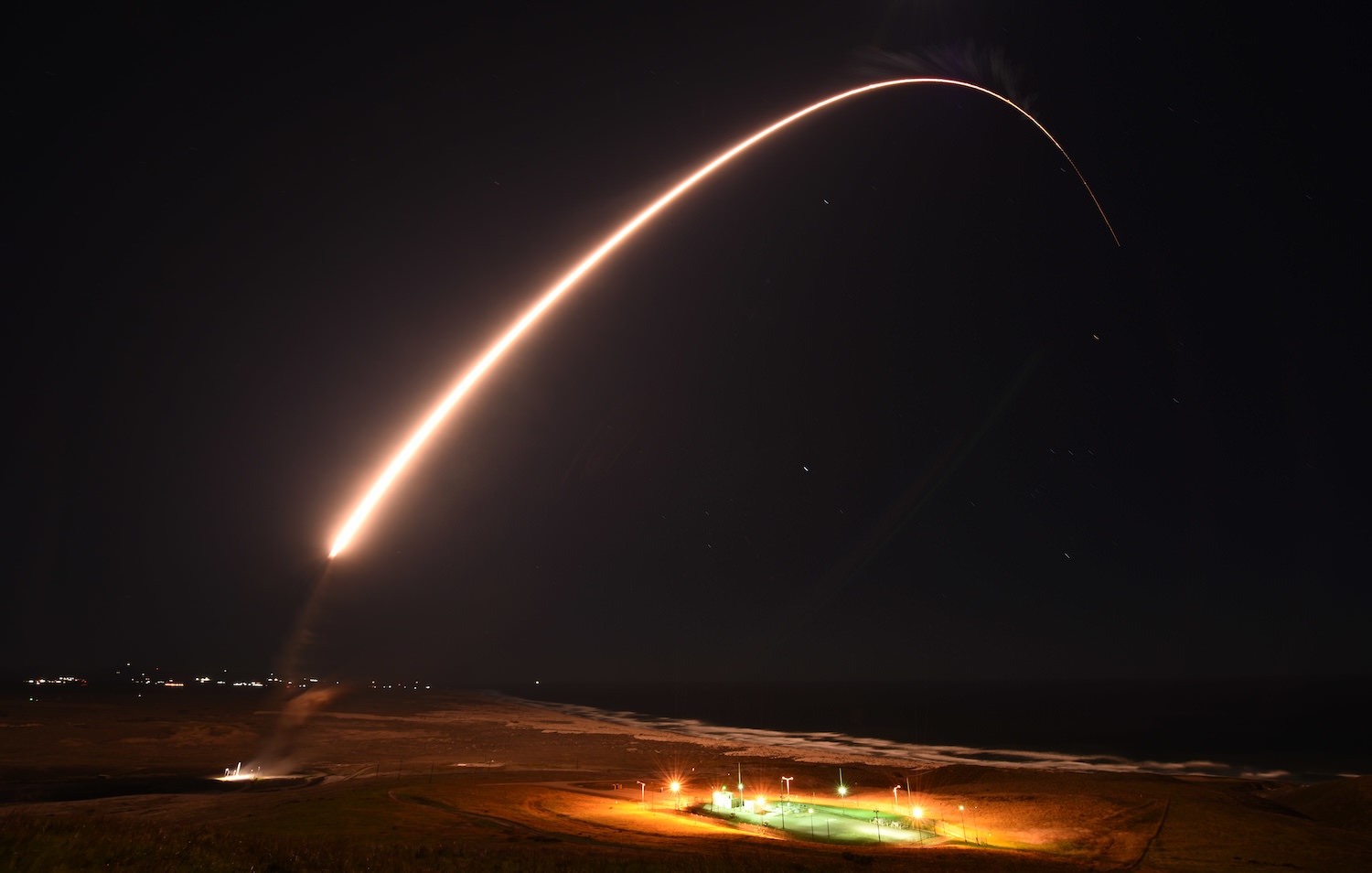
Land-based intercontinental ballistic missiles (ICBMs) like Minuteman III raise serious strategic risks stemming from their fixed geographical locations. Because they are vulnerable to a large-scale attack, they are constrained to a “use it or lose it” posture. In a crisis, national leaders could face pressure to issue a “launch under attack” order as they would have a narrow decision window of 15-30 minutes.
The Rome Declaration on Artificial Intelligence and Nuclear Weapons, signed on July 16th by Nobel Laureates and other world leaders, directly addresses this danger: “An automated system should never make the final decision to launch a nuclear weapon. We call for the adoption of an international treaty prohibiting the reckless integration of artificial intelligence into nuclear command, control, and launch systems so that meaningful human control is maintained.”
While at this point the actual launch of a nuclear weapon continues to require human authorization, the US Air Force already incorporates AI decision-aid software to rapidly accelerate targeting processes and analyze battlefield conditions. The dangers involved in procuring so potent an AI-powered tool across a panoply of 60 key systems on a fifty-year-old system like Minuteman require serious oversight by Congress, the media, and the public.
More broadly, the entire requirement for land-based ICBMs, including the gold-plated Sentinel ICBM replacement for Minuteman, needs to be reassessed, especially its inherently destabilizing ‘hair-trigger’ posture. In this narrow time frame, even the most astute decisionmaker will come to rely on AI-generated accelerated satellite telemetry, radar data, and intelligence feeds.
In addition, anomalies such as solar flares, satellite maneuvers, atmospheric events, and cyber intrusions can cause AI misinterpretations, and there is always the threat of an autonomous AI system intentionally misinterpreting this critical data. The danger also lies in human operators under immense psychological pressure naturally deferring to complex algorithms that present high-confidence threat models.
Nevertheless, the Air Force is extending its reliance on AI systems in the Minuteman ICBM deployment. On July 24, the Air Force Nuclear Weapons Center issued a Request for Solicitation “to determine whether there are capable industry sources with the expertise, experience, and resources necessary to design, develop, test, and implement an Artificial Intelligence (AI) powered software tool. This tool will provide a centralized data query and assessment capability, as well as enhanced visualization of complex technical data, for the Minuteman III ICBM program.”
The rationale for this AI-powered software tool also relates to Minuteman III’s scheduled replacement by the $141 billion Sentinel ICBM program, which has come under heated criticism for cost overruns and procurement delays. The 400 aging Minutemen will remain operational until at least 2050, more than 70 years after initial deployment. The Air Force is now digging 450 holes—each silo at least 80 feet deep—to fit the new Sentinel. Like the Minuteman, it will be capable of carrying at least one 300-megaton warhead—roughly 30 times the explosive power of the bomb that destroyed Hiroshima—to a target 6000 miles away.
Not surprisingly, Minuteman components have become increasingly difficult to maintain. Many original manufacturers of these specific semiconductors, vacuum tubes, and microprocessors have gone out of business or discontinued the parts. The Air Force frequently relies on cannibalizing parts from decommissioned missiles or sourcing components from a dwindling pool of specialist defense contractors. Technicians must service discrete components on circuit boards rather than replace modular, modern digital units. This increases maintenance hours and system down time. Thus, the attraction of a comprehensive AI software tool is understandable. Ideally, the AI will act as a “bridge” to manage the legacy missile systems while the military prepares to transition to the Sentinel program.
Despite Air Force assurances, the introduction of even an AI tool with purported constraints raises serious issues of human command and control over these Doomsday weapons. There is for example the real and harrowing possibility that vulnerabilities among the relevant systems could be exploited by a rogue AI presence. In the words of the Request for Solicitation, “past efforts to establish a unified product lifecycle management digital ecosystem have not come to fruition.” The project at first will only have access to uncontrolled unclassified information (government or organizational data that is neither formally classified for national security nor restricted by specific dissemination controls), but the Air Force anticipates future upgrades to Secret data (the middle tier of government and national security classifications applied to sensitive material whose unauthorized disclosure could reasonably be expected to cause serious damage). And with mandated periodic audits and security reviews, the Air Force assumes no serious incidents or data spillage.
The Air Force has already awarded a $31 million contract to a company named Air (formerly Govini) to support the ICBM enterprise, which comprises the integrated military, industrial, and technological systems required to develop, test, maintain, and operate the Air Force’s ICBMs.
Air’s AI-based platform seeks to close a perceived “readiness gap” between what the front line needs and what the national security enterprise delivers. In its own words, Air activates data, orchestrates collaboration, and executes workflows, ensuring government agencies and industrial suppliers have the capability and capacity to meet mission objectives across steady-state and dynamic operations. The Air contract demonstrates how quickly the Air Force is moving to inject AI capabilities throughout its superannuated Minuteman system.
In its closing, the Rome Declaration promotes an agenda to confront the AI menace, specifically aimed at land-based missile deployments: “States should pursue verifiable restraints and reductions; lower alert levels; extend decision time; move away from launch-on-warning and prompt-retaliatory postures; reduce the role of nuclear weapons in security doctrines; strengthen crisis communications; prevent cyber operations against nuclear command, control, and communications; and build cooperation to prevent misunderstanding, miscalculation, and unintended escalation.” More broadly, the Declaration calls for “the verifiable and irreversible elimination of nuclear weapons.”
The United States must heed this warning. The first step for the US is to move away from dependence on land-based ICBMs and the “launch on warning” conundrum that is inherently destabilizing. The US already possesses an impervious ballistic-missile submarine fleet that provides decision-makers with more time and flexibility. In addition to increased time and flexibility, strategic bombers have the capacity to be recalled. These deterrent systems are sufficient to dissuade a Vladimir Putin or Xi Jinping from undertaking a reckless gamble risking the total destruction of his own country. Maintaining Minuteman to 2050 allows negotiators breathing space to reach strategic arms reduction agreements.
More immediately, in the words of the Rome Declaration: “Nuclear states must engage in fail-safe reviews to reduce the vulnerability of their nuclear forces to unauthorized control or manipulation by AI.”
Robert Rudney is a retired Senior Advisor in the Department of the Air Force.