



Donald Trump has explained what the United States is doing in Venezuela in unusually candid terms. Speaking in Las Vegas on August 5 about the January military operation that removed Nicolás Maduro, Trump said the United States was “taking a lot of oil from Venezuela” and had already been repaid for the war “many, many, many times,” adding, “To the victor belong the spoils, right?”
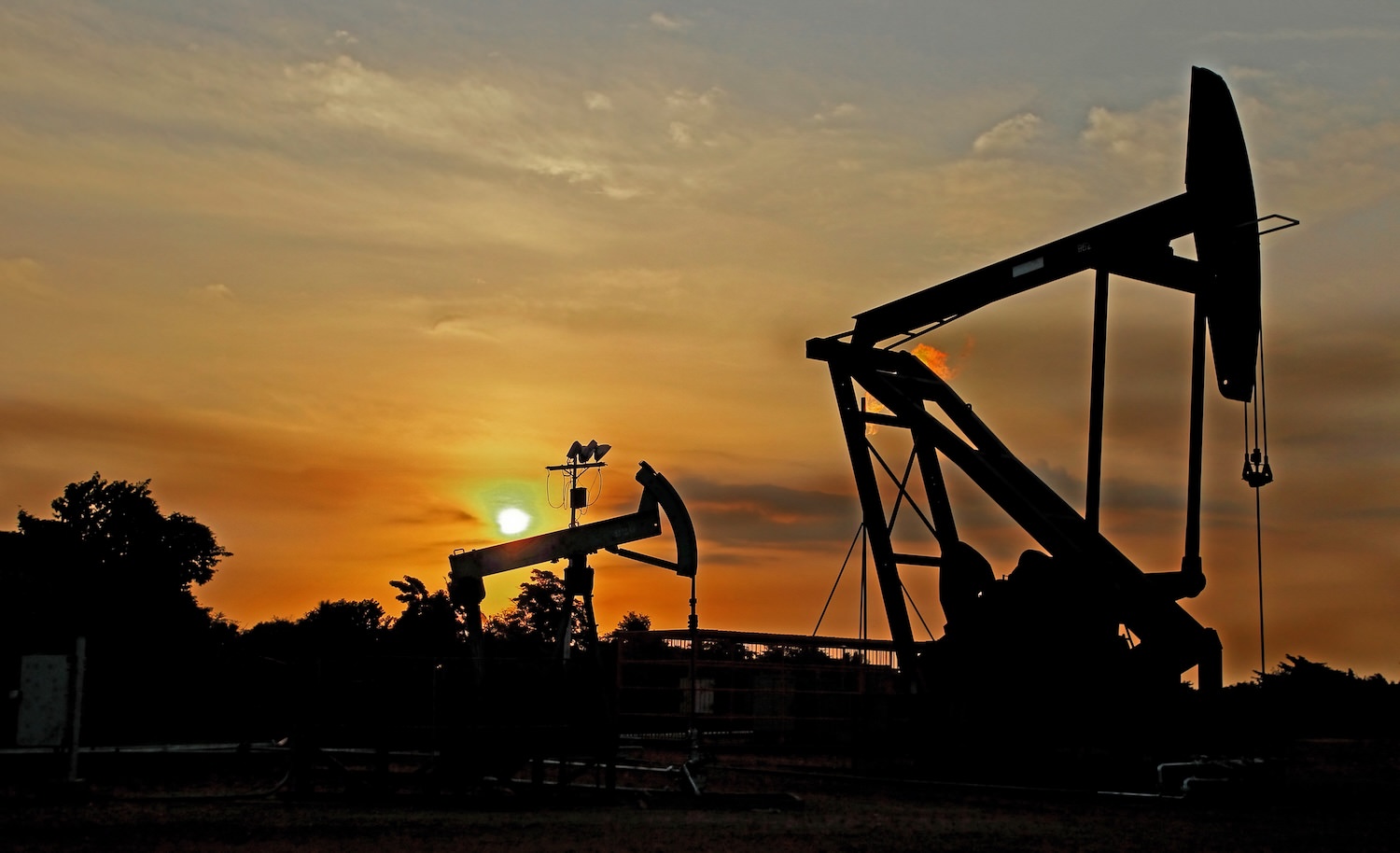
The spoils are considerable. Venezuela possesses the world’s largest proven petroleum reserves, which have historically provided 85% or more of its foreign exchange funds. Since Maduro’s removal, Venezuela remains formally sovereign and in principle still owns its natural resources. But Trump and his administration are now dictating who develops them, who buys the oil and what happens to the resulting revenue.
Since January, the administration has chosen to use its new authority in Venezuela to channel the exploitation of its natural resources to Trump donors, companies connected to Trump’s family, politically connected businessmen, former administration officials and their employers, and clients of Trump-connected lobbyists. Some of the Trump administration’s partners in exploiting Venezuelan oil and other natural resources were previously targets of U.S. enforcement efforts relating to bribery, corruption, money laundering, sanctions busting, and other serious financial crime. Other selectees have had no such histories, but have links to the Trump administration, the Trump family or Trump interests through campaign contributions, business ventures or other forms of pay-to-play.
The First Deals—Companies With Histories of Paying Bribes
The Trump administration’s willingness to select people and companies with histories of serious criminal conduct to participate in the Venezuela opportunity was visible from the outset. After Maduro’s removal, the administration immediately chose Vitol and Trafigura, two giant commodity traders, for the initial sales of Venezuelan oil in deals worth roughly $250 million each.
John Addison, a senior Vitol trader, had contributed more than $6 million during the 2024 election cycle, overwhelmingly to Trump-aligned political committees. Trump invited him to a January 9 White House meeting on Venezuela with oil executives. Addison told Trump that Vitol could sell Venezuelan oil at the best price “so that the influence that you have over the Venezuelans will ensure that you get what you want.” Days later, Vitol was selected to take and sell Venezuelan oil.
Vitol was already well known to the federal government. In 2020, Vitol admitted participating in schemes to bribe officials in Brazil, Ecuador and Mexico, agreeing to pay more than $135 million to resolve the Justice Department investigation and additional monetary penalties and disgorgement in a parallel CFTC action.
Trafigura had an even more recent corruption record: in 2024, it pled guilty in federal court to conspiring to bribe Brazilian officials to obtain business from Petrobras, the country’s state-owned oil company.
The administration had an entire global commodities industry from which to choose. Out of these, it chose two companies with recent records of paying bribes to obtain state business, and one whose senior trader had given more than $6 million to Trump-aligned political committees.
From Money-Laundering Target to Government Partner
Venezuelan businessman Alejandro Betancourt made his first great fortune during Hugo Chávez’s presidency. His company, Derwick Associates, received large no-bid contracts to build power plants during Venezuela’s electricity crisis. He then became the subject of multiple investigations in the United States and Europe involving money laundering and alleged diversions of Venezuelan public funds.
During the first Trump administration, the Justice Department was considering charging Betancourt in a federal criminal case involving an alleged scheme to launder some $1.2 billion stolen from Venezuela. In 2019, Betancourt retained Rudy Giuliani, Trump’s personal lawyer, who went to the Justice Department to argue that Betancourt should not be prosecuted because, among other things, he had been a major funder of the U.S.-backed Venezuelan opposition. Eight other men, including Betancourt’s cousin, had already been charged in the case. Betancourt was referred to only as “Conspirator #2,” an unindicted co-conspirator alleged to have received some $85 million in proceeds from the scheme. He was never charged.
Although Betancourt was not indicted by the U.S., other governments continued their criminal investigations, assisted in some cases by U.S. law enforcement. Betancourt was arrested twice in Britain in 2025 on European warrants. Spain sought his arrest on an alleged multibillion-dollar PDVSA-related money-laundering scheme. Swiss authorities were simultaneously investigating him for alleged money laundering and in May 2026 asked the United States to detain him. At that point, rather than help Switzerland, senior Trump administration officials intervened to help Betancourt.
At the request of a senior State Department official, the U.S. Consulate in London gave Betancourt a multiple-entry visa, and he began traveling repeatedly to Washington for high-level meetings. Betancourt had become useful. He had provided information to the United States as it enforced its blockade of sanctioned Venezuelan oil tankers. He had also served as an intermediary with Rodríguez and other Venezuelan officials, offering Rodríguez reassurances when other Trump emissaries threatened her. Then in March 2026, a Trump emissary called Betancourt with a proposition: the United States government wanted to become his business partner. Betancourt would surrender a substantial part of his company and some of his independence. In return, Washington would help him gain access to vastly greater Venezuelan oil reserves and the backing needed to become what the emissary called a “global player.” Betancourt’s answer: “I’m all in.”
Betancourt and the Trump administration thus became partners in what Trump called “the biggest oil deal in world history.” North American Blue Energy Partners, or NABEP, was granted rights with no competitive bidding to 14 additional Venezuelan oil fields, bringing its total to 17, with an estimated 65 billion barrels of reserves, roughly one-fifth of Venezuela’s total. The Trump administration says NABEP’s rights extend for 100 years.
Under the bargain announced by the White House, the Pentagon’s Office of Strategic Capital, or OSC, would receive a 35 percent interest in NABEP’s parent company, along with the right to purchase 20 percent of NABEP’s Venezuelan production at cost and preferential access to the remainder. In return, Betancourt and NABEP would be granted access to approximately one-fifth of Venezuela’s oil reserves. The same government that once investigated him would now take a stake in Betancourt’s business, lend him and his company credibility, and by its presence help NABEP attract the estimated $100 billion in investment needed to develop the fields.
Engineering Around the Law
The publicly announced terms of the Betancourt transaction appear to be incompatible with existing law in both the United States and Venezuela.
Congress created OSC to finance strategically important technologies and assets, authorizing it to provide loans, loan guarantees and technical assistance. OSC’s enabling statute does not give it general authority to acquire equity and petroleum production is not among the statute’s covered technology categories. Congress has repeatedly considered legislation that would expressly authorize OSC to acquire equity and warrants in specified strategic sectors and create machinery for holding and disposing of those investments, but has never enacted that authority. The pending Senate FY2027 defense authorization bill would grant OSC limited ability to acquire equity, but that legislation has not become law.
The administration instead turned to a work-around called “penny warrants.” The warrants would allow OSC to acquire shares later for a nominal price while giving the government dividends and other economic benefits of its 35 percent interest immediately. An administration official said they provide “all the benefits of being an equity holder today.” The distinction appears largely formal. When the transaction was first reported, a Pentagon spokesman said OSC “does not take equity stakes in private companies” and that its authority is “strictly limited” to loans, loan guarantees and technical assistance. The penny-warrant structure gives OSC the economic benefits of an equity position that Congress has not authorized it to acquire directly.
That raises another unanswered question: what happens to the money the government receives? Under the federal miscellaneous-receipts rule, money received for the United States must be deposited in the Treasury unless Congress provides otherwise. Nothing publicly disclosed about OSC appears to create an exception for dividends or proceeds from the NABEP warrants. The administration has not released the agreement or explained who legally holds the warrants, who can exercise or sell them, how they will be valued, where the resulting funds will be held, or how they will be used.
The State Department’s new oil rights present a similar problem. The White House says State will have the right to buy 20 percent of NABEP production at cost and preferential rights to the remainder. The administration has identified no statutory authority giving the State Department such commercial rights.
Venezuelan law presents a separate problem. Its recently amended Organic Hydrocarbons Law provides no visible route to the century-long concessions announced by Washington. Foreign companies may participate in mixed enterprises in which the Venezuelan state retains majority ownership, but those arrangements have an initial maximum term of 25 years, with one extension of no more than 15 years. The amended law also permits private companies to operate oil fields under production participation contracts with state-owned Venezuelan entities. But those are contracts to produce state-owned oil, not concessions giving the private company rights over the reserves themselves. Neither route provides for the 100-year concession described by the White House.
The two governments also describe the transaction differently. The White House says NABEP received 100-year concessions and that the agreement gives the United States “majority control” of more than 65 billion barrels of Venezuelan reserves. But Venezuela’s Hydrocarbons Minister Paula Henao says the agreement runs for only 25 years and that “the control and ownership of the resources in the subsoil indisputably remain with Venezuela.”
Nor has Venezuela completed its legislative process. On September 1, the National Assembly adopted a resolution supporting the announced agreement, but Assembly President Jorge Rodríguez acknowledged that the agreement itself had not been submitted to the legislature. Six days later, Henao said the government would submit it to the Assembly, without saying when. As of September 16, there is no public indication that it has done so.
Whatever legislative approval Venezuelan law ultimately requires therefore remains unfinished. And legislative approval alone would not explain how the century-long concessions described by Washington can be reconciled with the Organic Hydrocarbons Law. Meanwhile, Congress has neither authorized the novel federal property interests created by the transaction nor approved the agreement.
The administration is thus attempting to create a vast, century-long U.S. economic interest in another country’s natural resources without an identified legal basis for doing so under existing U.S. or Venezuelan law.
More People Through the Door
Betancourt is the largest example of the Trump network’s emergence in Venezuela, but there are several others. Alex Cranberg’s Aspect Holdings participated in Trump’s January White House oil meeting and subsequently reached an agreement with PDVSA opening Venezuelan exploration opportunities. Cranberg’s company contributed $1 million to Trump’s 2025 inaugural committee, and former House Speaker Kevin McCarthy sits on Aspect’s board.
Primavera, a recently formed energy investment vehicle, entered into an oil-field development agreement with Venezuela on September 2, with U.S. Secretary of Energy Chris Wright overseeing the signing. Its founder, Coinbase co-founder Fred Ehrsam, gave $1 million to Trump’s inaugural committee. Trump then appointed Ehrsam to the President’s Council of Advisors on Science and Technology in March.
On September 16, Continental Resources signed a memorandum of understanding with PDVSA covering the Ayacucho 2 block in Venezuela’s Orinoco Belt, which the company estimates contains some 30 billion barrels of oil. Continental’s founder, Harold Hamm, is a longtime Trump ally, adviser and major financial supporter. Hamm contributed more than $2 million to Trump’s political campaigns and has helped raise additional money for Trump from the oil industry. Reuters reported that Continental had discussed potential Venezuelan investments with the Trump administration earlier this year. Now Hamm’s company is in line for a potentially enormous Venezuelan oil opportunity.
Sable Offshore is now in advanced talks to secure Venezuelan oil-field opportunities. The company has already benefited from extraordinary intervention by the Trump administration. In March, Energy Secretary Chris Wright invoked the Defense Production Act to order the restart of Sable’s California oil operations, which had been blocked by state regulatory and legal obstacles. Brittany Kelm, a senior White House energy official who had worked on Venezuela, subsequently left the administration to become a Sable vice president.
The Trump-connected lobbying industry is there too. Ballard Partners, founded by longtime Trump fundraiser Brian Ballard, registered in January to represent Maha Capital for the stated purpose of obtaining “Approvals for Venezuelan oil field acquisitions and operations.” Its lobbying team included recent Trump administration officials. Maha subsequently combined with KEO World and became KEO Capital; its energy arm expanded its interest in Venezuela’s PetroUrdaneta venture and entered agreements with PDVSA giving it substantial operational authority.
In short: Access to Venezuela’s oil is being secured through access to the Trump administration.
Reliance Industries and the Trump Family
When the U.S. captured Maduro on January 3, 2026, and left his deputy, Delcy Rodríguez, in place, Mukesh Ambani’s Reliance Industries had major interests before the Trump administration. It was heavily exposed to U.S. pressure over purchases of Russian oil and Trump’s tariffs on India. It also was seeking to secure U.S. authorization to resume buying Venezuelan crude.
The Ambanis already had a relationship with the Trump family. As detailed by Pro Publica, Reliance had paid the Trump Organization a $10 million development fee in 2024; Ivanka Trump attended the Ambani wedding festivities that year; and Mukesh Ambani attended Trump’s 2025 inauguration. As Reliance’s interests before the U.S. government grew, Donald Trump Jr. met Ambani’s son Anant in India in November 2025. Trump Jr. had also quietly acquired an interest in America First Refining, an obscure Texas refinery venture.
In February 2026, the Trump administration authorized Reliance to purchase Venezuelan crude directly. Reliance then made a “nine-figure investment” in America First Refining, in which Trump Jr. was an owner. President Trump personally promoted the transaction. A foreign conglomerate with major interests before the U.S. government thus obtained permission to resume buying Venezuelan oil and then made an investment of at least $100 million in a company partly owned by the president’s son. The investment did not go to the U.S. government; it went into a private venture in which the president’s son held a financial interest.
Chevron: The Incumbent
Chevron is different in its relationship to Venezuela and Trump. It did not enter Venezuela through Trump; it has operated there for generations and survived Chávez, Maduro and successive rounds of American sanctions. What Trump controls is Chevron’s ability to remain and expand. His administration initially restricted Chevron’s authorization, then restored and broadened it, and Chevron has now agreed to a multibillion-dollar expansion of its Venezuelan operations.
While its Venezuelan future remained dependent on Washington, Chevron became a substantial financial supporter of Trump’s projects. Chevron gave $2 million to Trump’s inaugural committee and, on May 28, paid $5 million to Freedom 250 LLC, the private organization supporting Trump’s celebration of the nation’s 250th anniversary.
Chevron did not need Trump to give it Venezuelan oil fields; it needed Trump to let it keep and expand the ones it already had.
Eni: Welcoming a Bribery Recidivist
On September 2, with U.S. Energy Secretary Chris Wright and Delcy Rodríguez looking on, Eni and PDVSA signed a 25-year agreement making Eni operator of the giant Junín 5 oil field, with responsibility for its technical, financial and commercial management. Eni and PDVSA plan to invest about $1.5 billion a year in the project.
Eni has a substantial history of bribery cases involving government-owned energy companies. In 2010, its then-subsidiary Snamprogetti paid a $240 million criminal penalty to resolve a Justice Department case involving a decade-long scheme to bribe Nigerian officials to obtain more than $6 billion in LNG contracts. Eni and Snamprogetti paid another $125 million to settle related SEC charges.
Ten years later, the SEC called Eni a “recidivist” in another FCPA case, this time involving Algeria. The SEC found that Eni-controlled Saipem paid approximately €198 million through sham contracts with an intermediary, some of which went to Algerian officials or their designees, while Saipem obtained at least seven contracts from Algeria’s state-owned oil company. A senior Saipem executive who helped orchestrate the scheme later became Eni’s CFO and continued facilitating the payments. Eni paid $24.5 million to settle the case without admitting or denying the SEC’s findings.
Eni has faced corruption investigations elsewhere as well. In 2021, following an investigation of its activities in the Republic of Congo, Eni agreed to an €11.8 million sanction after prosecutors reduced an international-corruption allegation to undue inducement; Eni did not admit guilt.
None of that history has impeded Eni’s renewed role in Venezuela. The Trump administration is welcoming the investment, notwithstanding Eni’s repeated involvement in bribery and corruption cases arising from the pursuit of foreign energy contracts. No independent audit or other project-level oversight of Eni’s new Junín 5 operations has been publicly disclosed.
The Watchdog
The administration says there is a safeguard: the Big Four global auditing firm KPMG. In April, the State Department awarded KPMG a sole-source contract to oversee Venezuelan natural-resource revenues. The initial award was $5 million; the contract can grow to more than $84 million over five years.
KPMG is to help design and operate the financial-control system, vet counterparties and Venezuelan budget requests, trace payments, verify downstream recipients and look for diversion or misuse. When the administration first described KPMG’s role to Congress, Michael Kozak, a senior career official at the State Department specializing in Latin America, called KPMG the “independent auditor” and said it would conduct quarterly audits. Marco Rubio subsequently promised Congress the audit results. By July, however, Kozak was describing KPMG as “monitoring” the money rather than conducting formal audits, and none of the promised quarterly audits has been made public. At this point, there is no public evidence that the promised formal audits are being conducted at all.
KPMG is thus not simply examining a financial-control system built by someone else. Its government contract makes it a participant in designing and operating the system it is supposed to watch.
The Job for Congress
Congress has a fundamental question to answer: why did these companies and individuals receive the opportunities the Trump administration has created in Venezuela, and what flowed back to Trump, his family, his political operations and his associates?
The pattern is already substantial. Vitol’s John Addison was a major Trump donor before his company was selected for the first Venezuelan oil sales. Aspect Holdings and Primavera were backed by million-dollar inaugural donors before obtaining Venezuelan opportunities. Reliance needed favorable decisions from Washington and then invested nine figures in a refinery venture partly owned by Donald Trump Jr. Chevron contributed millions to Trump’s inauguration and Freedom 250 while its ability to operate and expand in Venezuela remained dependent on administration decisions. Trump-connected lobbyists have been retained to obtain Venezuelan oil approvals. Sable received extraordinary federal assistance at home, hired a senior White House energy official, and is now pursuing opportunities in Venezuela. Betancourt went from the subject of criminal investigations and an international arrest request to a favored intermediary and ultimately the administration’s partner in control of roughly one-fifth of Venezuela’s oil reserves.
Congress needs to determine what role these financial and political relationships played in the selection of those provided the opportunities to participate in the energy opportunities unlocked by the U.S. taking charge of Venezuela’s energy development. The administration selected Vitol and Trafigura without competition, and NABEP received 14 additional fields without a competitive process. Among the beneficiaries are Trump donors and political supporters, companies tied to his family, politically connected intermediaries and former administration officials and their employers. Benefits have also flowed in the other direction: campaign and inaugural support, money for presidential projects, and private investment in a business partly owned by the president’s son. The central question is the extent to which these reciprocal benefits explain how the administration chose who would share in the Venezuelan harvest.
The administration says the NABEP arrangement includes U.S. auditors, financial monitors and “robust governance protections,” but it has not identified the auditors or monitors, disclosed their mandates or said whether their findings will be reported to Congress or the public. Nor would auditing the transactions provide independent oversight of how the administration chooses who receives Venezuela’s oil fields, licenses and other opportunities, or of the political and financial relationships surrounding those decisions.
Congress can obtain the communications and financial records showing who recommended the beneficiaries, what alternatives were considered, what criteria were applied, who inside and outside government participated in the decisions, and what officials knew about political contributions, Trump-family investments and other financial relationships when licenses, contracts, concessions and regulatory benefits were granted.
Some members of Congress have begun trying. House Oversight Democrats have sought records from the administration concerning the selection of Vitol and Trafigura and the disposition of Venezuelan oil revenues, and Senate Democrats have proposed a GAO audit of the administration’s offshore oil-revenue arrangements. On September 15, House Foreign Affairs Western Hemisphere Subcommittee Democrats sought to subpoena federal agencies and private companies for records concerning the NABEP transaction. Republicans opposed the motion, producing a 6–6 party-line vote and defeating the subpoena. Congress therefore remains without the compulsory disclosure necessary to determine how the system has operated.
As Juvenal asked almost two thousand years ago: Quis custodiet ipsos custodes?—who will guard the guards themselves?
Were these normal times, the answer would be Congress.
Jonathan M. Winer, a former senior State Department official, is a member of The Washington Spectator Editorial Advisory Board. He is also active with The Steady State, a nonpartisan organization of more than 280 former senior national security professionals from the CIA, FBI, Department of State, Department of Defense and Department of Homeland Security which advocates for constitutional democracy, the rule of law and the preservation of America’s national security institutions.